miércoles, 9 de marzo de 2011

The Coportation

Summary
Documentary: The Coporation

Is a film by Mark Achbar, Jennifer Abbott and Joel Bakan, that shows how the new trend of the XX and XXI is the corporation, an entity that has overcome all of us and has brought terrible consequences to all of us and our environment. The film is divided in segments, here’s a brief explanation of each one of them.
The film explains how the corporation as an “individual” was born with the help of people who wanted more and more power, and through the help of some witty lawyers it became one the most relevant players in today’s world.
The company’s goal is to earn large growing sustained and “legal” returns for the people who own it, its all about productivity and efficiency; and for that purpose it has something called Limited Liability, which is being a “new” person who can buy and sell property, sue and be sued just like a normal individual would, but the irony of this is that the company ---Has no soul to save or body to incarcerate- giving it a lot of power to do things but in the moment something goes wrong who is the responsible?
Because the company is now considered a “person”, the film tries to portrait it as such, showing its flaws and qualities; the most representative flaw of the company as a “person” is that it acts in a highly anti-social way, being self-interested, amoral, deceitful, feels not guilt; all of these making it a psychopath who harms other people in order to achieve it own self-fulfilling goals.  


Topic Question

Corporations are “legal entities” and have a psychopathic behavior. Do you agree?
-I absolutely agree because the film portraits and explains how its behavior and way of doing things affect directly ourselves and our environment; but we don’t have to be so harsh with it, because the company is an element who has become essential for our lifestyle, the thing that it has to change is thinking about it own benefit and profit and star thinking on the well being of the entire world, because after all, it’s its world too.

Click on image to sees it right!!!
Image retrieved on March 2011 from http://www.hightowerlowdown.org/sites/hightowerlowdown.civicactions.net/files/images/cartoon_200304.gif

Decision Making

Summary
The basic role of every manager is the decision-making, this process is innate in each and every person, but managers should be aware of the steps that it requires in order for the goal of the organization to be accomplished in the desired way.
Basically this process begins with the recognition of the need to make a change or solve a problem, after that the manager must identify the objective that the organization must reach, gather all the data available for this and evaluate it I order to diagnose the situation, then list the evaluation alternatives, select the best course of action to implement the decision, after the decision is operating the manager must gather feed back and make a follow up of it in order to see if the descicion or the operation is being well developed and if it need changes.

Here are some models that helps on the procees of desicon making
 1.Effective Decision model
A model that expresses the desire objective and its acceptable to those individuals affected by it.
2. Rational Model
This model gives a description in how the behavior of the individuals of the organization must behave in order to optimize the outcome of the procees.
3.Bounded Rationality model
Explain that not all the decisions are made ratonally, and that there are some limits to towards that rationality, some decisions must be made following ones instincts.
4. Garbage Can model
Its when the decisions are made randomly and without any order at all, its an unsystematic model, which generally leads to failure.

In order to make a decision in an organization, the manager or individuals who are in charge of making that decision must be aware of the risks of making that decision; some people tend to be risk averted which means that they don’t like to take big risks and specially don’t like to live in uncertainty; by the other hand there are some people that are risk takers who tolerate greater potential for losses and tolerate a greater amount of uncertainty.
A manager must direct their employees in order for them to take risky decision if needed, without the fear of being punished, because if the risk taking behavior is suppressed the creativity and innovative ideas of the individuals will be compromised and lost.
Group thinking is the most common way of gathering ideas to reach a goal in an organization, but it has some setbacks because  it deteriorates the mental efficiency and the moral judgment which leads to pressures within the group.
But as group decision making is so important in organizations, some techniques has been developed in order for it to be more useful for the organization itself and the goals it has.
·         -Brainstorming (proposing many ideas from each individual of the group and then evaluate which is the best one)
·         -Nominal Group Technique (generation of different alternatives)
·         -Delhpi Technique (gathering the knowledge of experts in order to make the proper decision)
·         -Devil’s Advocate (giving an individual the role of critic in the decision making process in order to prevent group thinking)
·         -Dialectical Inquiry (an intellectual debate between two parties whith different ideas or opinions)

Its always important for the manager to act and instruct his employees to act according the ethical values of the organization.


Topic Question

How can organizations effectively manage both risk taking behavior and escalation of commitment in the decision making behavior of employees?
-Organizations should reward its employees and encourage them to make decisions without fear, but instructing them in the proper way of making that decision so the outcome doesn’t result on failure and the consequences of that failure affect directly the organization.

martes, 8 de marzo de 2011

Organizational Motivation

Summary

For a manager, motivation should be one of the priorities when dealing with his employees, because motivation helps to reach the goal proposed, it creates a real and direct interest in the activity they have to do.
Motivation can be separated into three main kinds:
Internal motivation is the willingness of the subject to do the activity proposed to him to reach an own personal goal.
Process motivation is the motivation the individual has when interacting with the environment that surrounds him.
External motivation is the one that only deals with the elements of the environment and how they affect the individual’s motivation.
All human being is always needing something and that need is the one that makes the individual to move towards that specific outcome.


Managers must motivate their employees though incentives and recognition in order for the employee to feel more motivation if he achieves the goal planned by the organization, some of these incentives could be economic, material and special distinctions like the recognition of being the employee of the month.
There are several theories that explain how motivation works in organizations, here are some:
·         Theory X and Theory Y: Managers must recognize if the employee is more motivated from things of low order where workers becomes a cost (Theory X) or from high order where workers becomes an assests (Theory Y).
·         ERG Theory: All employees have multiple needs expressed in three groups Existence (Physiological needs – Physical security), Relatedness (Interpersonal security – Belongingness – Social esteem) and Growth (Self esteem – Self actualization).
·         McClelland’s needs theory: Explains the different needs and the motivators for the manager to fulfill those needs for his employees. Need of achievement and the motivator are challenging projects with reachable goals where money is not a motivator. Need of Power, the motivator is a cooperative and harmonious environment. Need of affiliation which motivator is the opportunity to manage others.
Always remember that your two cent worth something, you will always have the right to have an opinion in things that affects you in some way.

Take the 20 min this videos last... good to apply for own's life


Topic Question

In multicultural organization context, what could be a good strategy to keep people towards a common task?

-Being a manager within a multicultural organization I think the best and most simple strategy to keep your people working well towards a common task is getting to know well all your employees and what kind of motivator drives them better towards the common goal, but because there are  a lot of individuals who are different from each other try to find something that works for everyone, but if you are going to do it for only one employee is always good to know him and know his needs to know how to motivate him properly. 

Personality Attitudes

Summary

Each individual is unique and also has a unique way of thinking and perceiving the world, has its own values, ethics, and abilities; all of these elements form the personality of the individual and makes one different from the others.
The Trait Theory is a theory that summarizes and explains the personality of an individual separating it in 5 traits.
·         Extraversion (social, assertive person)
·         Conscientiousness (hardworking, organized person)
·         Agreeableness (warm, cooperative person)
·         Openness to experience (creative, curious person
·         Emotional stability (calm, self-confident person)
One of the most relevant and known elements of the personality of a person is its Self-Esteem which is the way the individual sees himself both physically and emotionally, this is a determining part in how the individual is going to relate to the others and specially how is he going to work in a group.
Another relevant element that forges the personality of an individual is the Self-Monitoring which is how the other people see you and treat you based initially on how you act, this element goes by the hand with the Self-Esteem because if you don’t start by treating  yourself well, who is going to treat you well.
People won’t tell you everything about themselves right away, so sometimes you have to analyze the person so you can find a way to trait him, this is called Social Perception, the process of interpreting information about other person and its influenced by ourselves as perceiver, the characteristics of the person we are perceiving and the situation where thw interaction takes place. But social perception has some barriers such as stereotyping (standardize a person just because of his social group), self-fulfilling prophecies and selective perception.
Values are beliefs that relates a social group within themselves and goes along with the attitude, who is also one element crucial for ones social interaction and therefore work in an organization, this is a tendency expressed by evaluating an entity with some degree or favor or disfavor; attitudes affect organizations because if the individual doesn’t have a good attitude about his job or doesn’t have the necessary commitment to it, the whole point of the organization, the common goal, is affected because of the low commitment.

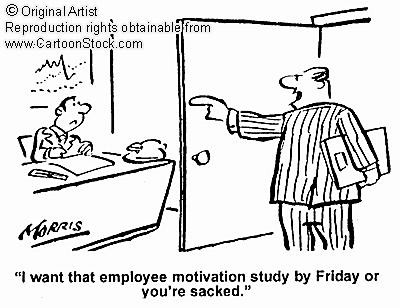
Cartoon retrieved on March 2011 from http://www.cartoonstock.com/lowres/ibn0107l.jpg


Topic Question

To what do you attribute the success of JICA?
-I attribute the success of JICA to its volunteers because they posses a set of values that allows them to think about helping the other without nothing in return, also their way of perceiving the others as someone that they can help but also learn something from them that will enrich them as persons only thinking about the proper development of the person they are helping.


Organizational Behavior - National and Organizational Culture

Summary

To explain the behavior of an organization first we need to understand what an organization is. Essentially an organization is a group of individuals that work together to achieve a common goal and its composes by four main elements which are the structure of the organization (how the organization functions, and how are the tasks divided between the actors to achieve the common goal); the task (generally are not just one and putting them together has a as result the common goal); the actors (are the individuals who performs the tasks); and finally the technology (the means and resources used by the actors to performs those tasks and reach the common goal).
Knowing this, the organizational behavior is the outcome of how the organization as a whole reacts before a given situation, and this dynamic provides the manager a sufficient amount of data to know what to change or improve on his organizations so it functions efficiently.   Also the manager has to be aware that the organizational system is composed by both the formal (most visible part) and the informal (least visible part) organization, and by being aware of this gives his the advantage to handle his actors to achieve the common goal. The most common challenges for a manager to handles the organizational behavior are the diversity of his forces, the awareness of a moral and ethical behavior at the work that Is being made, the knowledge of technological innovation which helps to perform the task more effectively, and the globalizations of the organizations.

The culture is an important part fo the decision-making process in both the manager and the organization because it affects directly on the employee’s productivity and commitment, so a manager must use culture on his behalf so it doesn’t back fires at him and the organization itself.
The organization must be a diverse group to have different set of ideas and points of view but has to be a homogeny group so it can come up with decision that will benefit the organization itself.


Topic Question

Why is managing organizational behavior in changing times challenging?

- In this times when culture is not a big barrier as was 20 or 30 years ago, people in organizations are more aware of what’s happening al over the world with the help of just one click, so for the managers is challenging to manage the organization when it has the chance to make decisions with such amount of information at hand; the manager must take advantage of this situation by instruction and leading the organization towards the final goal without the organization being manipulated by that information and changing the goal proposed by the manager.


.png image, retirved on March 2011 from http://brainsnorkel.com/wp-content/uploads/2007/05/dilbert-minivan.png